
The Supreme Court is set to hear pleas challenging Chief Election Commissioner Gyanesh Kumar's alleged unilateral decisions without the concurrence of other election commissioners. The petitions seek his suspension and question actions like altering voter registration forms and handling electoral roll revisions in Goa and West Bengal, highlighting concerns over the multi-member character of the Election Commission.

The Supreme Court has issued notices to the Election Commission and the Centre regarding pleas alleging that the poll body made several decisions without the approval of the two election commissioners. The court stated it would annul any decisions found not to be in accordance with the law, while also refusing an interim order to restrain CEC Gyanesh Kumar from making decisions.

The Supreme Court has granted the Centre an extension until October 15 to file its response on petitions concerning the closure of metro stations and disruption of train services in Delhi during protests against Chief Election Commissioner Gyanesh Kumar and the Special Intensive Revision of electoral rolls. The court also deferred a crucial hearing, issued notice on a petition challenging the immunity of election commissioners, and sought a Delhi Police officer's presence regarding alleged assaults on women journalists. Earlier, the court had directed authorities to ensure normal public transport and prevent unlawful detentions.

A contempt petition has been filed in the Supreme Court against Union Home Secretary Govind Mohan, Delhi Police Commissioner Anurag Kumar, and DMRC chairperson D Thara. The plea alleges that authorities violated the apex court's October 9 order by imposing a "blanket shutdown" on metro and train services in Delhi on October 10, despite the court's directive for only regulated movement during a protest by the Cockroach Janta Party (CJP). The petitioner claims personal experience of metro station closures and seeks immediate revocation of prohibitory orders.
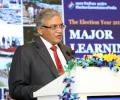
A petition has been filed in the Supreme Court challenging Chief Election Commissioner Gyanesh Kumar over alleged statutory duty violations and the controversial deletion of 13 crore voters during the Special Intensive Revision of electoral rolls, claiming decisions were made without the concurrence of other election commissioners.

The Supreme Court is scheduled to hear a plea on Sunday seeking contempt proceedings against authorities for allegedly violating its directive against a complete prohibition on metro and train services in Delhi during the CJP protest. The plea argues that the blanket shutdown and lack of transparent advisories constitute a deliberate disregard for the court's October 9 order, which had called for regulation rather than outright prohibition of public transport.

The Supreme Court on Sunday directed that people gathering peacefully should not be illegally detained and issued a notice to the Centre regarding alleged violations of its earlier order during a CJP protest in Delhi. The court also asked the Solicitor General to ensure normal metro services and no internet disruption, while addressing concerns about widespread detentions and transport closures.

The Supreme Court stated it has not approved any modifications to Form 6, used for electoral roll inclusion, during the Special Intensive Revision. This observation came during the hearing of a Public Interest Litigation (PIL) challenging alleged unilateral decisions by the Chief Election Commissioner regarding changes to Form 6 and electoral roll revisions in states like Goa and West Bengal, without the concurrence of his colleagues. The court issued notice on the plea, highlighting concerns over collective decision-making within the Election Commission.

The Supreme Court has clarified that 'criminal antecedents' for NEET paper leak protesters refer only to grave and heinous offences, allowing state governments to withdraw FIRs against students not involved in such serious crimes. This comes after the Centre's commitment to not pursue cases against most protesting students.

The Supreme Court of India has dismissed a Public Interest Litigation (PIL) seeking a nationwide policy for menstrual leave for women students and workers, citing concerns about potential negative impacts on female employment and the reinforcement of gender stereotypes.

The plea was mentioned for urgent listing before a bench headed by Chief Justice DY Chandrachud, which said it would be listed on February 24.

The Supreme Court on Friday refused to entertain a PIL seeking a direction to all the states to frame rules for menstrual pain leave for female students and working women at their respective workplace, observing that the issue falls under the policy domain of the government.

'Sonia did not visit this place once since she won. Who's to say they won't lose this one, too?'

Mamata set 6 conditions for the state government to withdraw their four-day-long stir.
